Two people can walk into the same shop with the same budget and leave with rings that age very differently. One wears hers every day for a decade and it still looks sharp. The other chips a stone in the first month and cannot work out why. The price tags were similar. The difference usually comes down to three things: how hard the stone is, how tough it is, and where on the body it gets worn.
The Mohs scale is the first tool most jewellers reach for when someone asks, "Can I wear this every day?" It is simple, genuinely useful, and widely misunderstood. Here is what it tells you, what it does not, and how to use it before you buy.
What the Mohs Scale Actually Measures
Devised in the early nineteenth century by the German mineralogist Friedrich Mohs, the scale ranks ten reference minerals from 1 (talc) to 10 (diamond) according to one property: resistance to being scratched. A mineral with a higher number will scratch one with a lower number. That is the whole test.
Two things trip people up. First, the scale is an order of rank, not a measurement. The jump from 9 to 10 is enormous; the jump from 1 to 2 is tiny. A stone rated 8 is not "80 per cent of a diamond". It simply sits two places below corundum and one above quartz.
Second, scratch resistance is not the same as strength. What the scale really predicts is how well a stone resists abrasion — the constant low-level scuffing from keys, door handles, grit on a worktop and the fabric of your coat. Abrasion is what makes a stone look tired long before anything dramatic happens to it.
Gemstone Hardness at a Glance
A rough guide to where the stones you are most likely to be offered sit on the scale:
- 10 — diamond. The only gemstone that scratches everything else, including other diamonds.
- 9 — ruby and sapphire. Both are corundum, and both are excellent daily-wear stones.
- 8 to 8.5 — spinel, chrysoberyl, alexandrite, topaz. Topaz sits at 8, and its perfect cleavage matters more than the number.
- 7.5 to 8 — emerald, aquamarine, morganite. All are beryl. Hard enough to resist scratching, but emerald is often included and brittle.
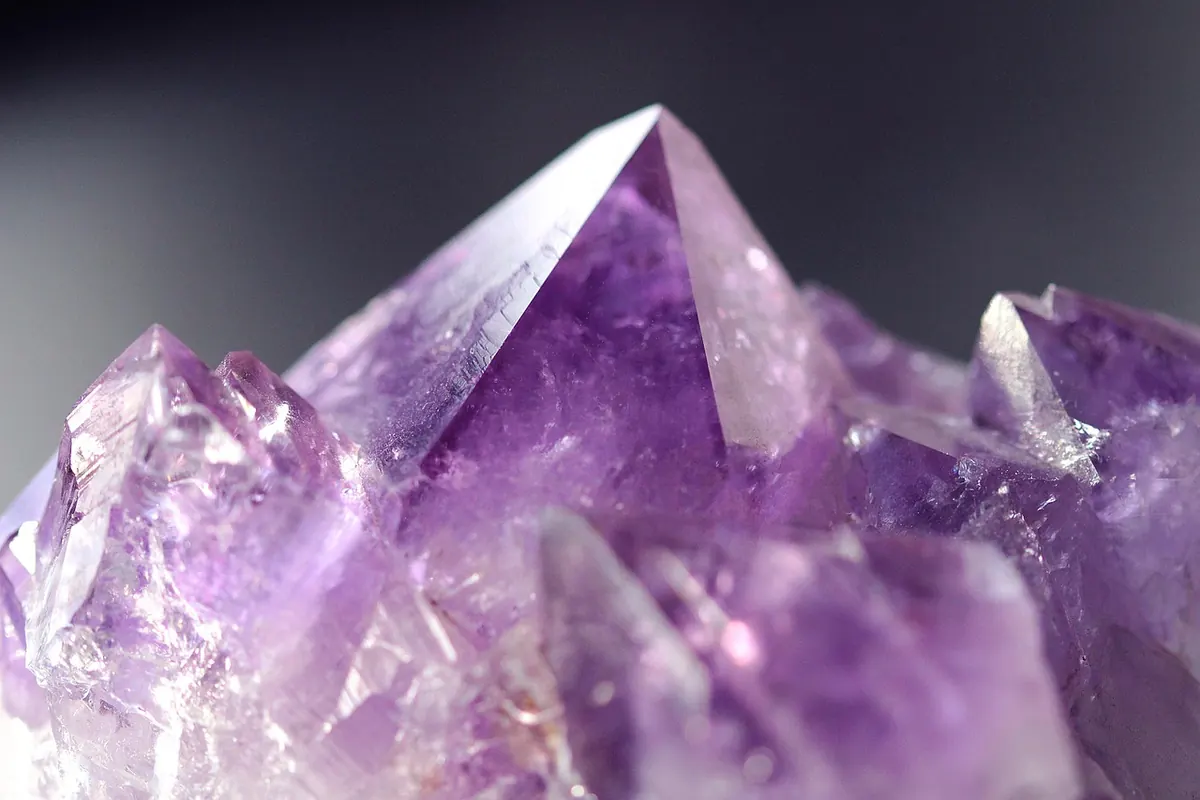
- 7 to 7.5 — tourmaline, amethyst, citrine, smoky quartz, rose quartz, most garnets. Quartz-family stones at 7 are the practical threshold for rings.
- 6.5 to 7 — peridot, moonstone, jadeite. Jadeite is modest on this scale but famously tough for other reasons.
- 5 to 6.5 — opal, turquoise, lapis lazuli, tanzanite. Lovely in earrings and pendants; demanding in rings.
- Below 5 — pearl, amber, coral, malachite. These are not minerals at all in most cases, but they are placed on the scale informally because buyers need a reference point.
Some stones are also harder in one direction than another. Kyanite is the classic example, soft along its length and much harder across it. Most gems behave consistently, but it is a reminder that a single number is a summary, not a full description.
Hardness Is Not Toughness
This is where a lot of good advice goes wrong. Hardness is resistance to scratching. Toughness is resistance to breaking, chipping and cleaving. They are separate properties, and a stone can be high on one and poor on the other.
Diamond is the hardest material on the scale, yet it has planes of weakness called cleavage. A sharp knock at the wrong angle can split it. Emerald, at 7.5 to 8, scratches far less easily than tanzanite, but emeralds are typically full of internal fractures and are prone to chipping at the corners of a step cut. Tanzanite has one perfect cleavage direction, so a single sharp knock against a car door can do real damage. Opal is relatively soft and brittle, and can craze if it dries out or is exposed to sudden temperature changes. Pearls scratch if they meet anything harder than a fingernail, which is most things.
At the other end, jade sits around 6 to 7 but is one of the toughest materials used in jewellery, which is why it survives being carved into bangles that get knocked against tables for decades.
Where You Wear It Matters More Than You Think
The same stone can be perfectly sensible in one position and a poor choice in another.
Rings take the heaviest punishment. Hands meet desks, shopping trolleys, weights, garden tools and car doors all day. A ring is also the piece most likely to be worn without thinking about it. If you are right-handed, a ring on your right hand will collect more knocks than one on the left.
Bracelets come second. They swing, they clatter against keyboards and rails, and they knock against each other in a stack. Two bracelets of different hardness worn together will scratch the softer one, so a diamond tennis bracelet next to a strand of pearls is a bad pairing over time.
Earrings, pendants and brooches are far safer. They hang away from surfaces and rarely take direct impact. Softer stones — opal, turquoise, moonstone, pearl — make far more sense here than in a ring.
Settings and Habits That Buy You Years
If you love a softer stone and want it in a ring, the setting and your habits do a lot of the work.
- Choose a protective setting. A bezel, which wraps metal around the edge of the stone, shields it from impact far better than tall, exposed claws. Channel and flush settings offer similar protection. If you want claws, keep them low.
- Take it off for the rough jobs. Cleaning, gardening, gym sessions, DIY and swimming. Chlorine and abrasive cleaners are unkind to most gems, and cold water shrinks fingers, which is how rings slip off.
- Store pieces separately. A diamond will scratch a sapphire, and a sapphire will scratch an amethyst. Soft pouches or a compartmented box prevent most of the damage people blame on "wear".
- Check the claws once a year. A quick look under good light, or a jeweller's check, catches a loose stone before it becomes a lost one.
- Clean gently. Warm water, a drop of mild washing-up liquid and a soft brush suits most stones. Skip ultrasonic cleaners for emerald, opal, pearl, tanzanite and anything fracture-filled or oiled — ask what treatment a stone has had before you clean it.
A Sensible Rule of Thumb
For a ring you intend to wear daily, look for 8 or above and you will rarely have cause for regret. Between 7 and 8 is workable if the setting is protective and the stone is not heavily included. Below 7, be honest with yourself: it can still be worn, but it will show marks, and you need to be comfortable with that. For anything softer, earrings and pendants are the kind choice.
None of this is a reason to avoid a stone you love. Plenty of people wear opals, pearls and emeralds every day and enjoy them for years. It is a reason to match the stone to the job, choose the setting deliberately, and treat the piece according to what it actually is rather than what the price tag implied. If you are buying something significant, ask your jeweller directly about hardness, treatment and aftercare — and check what your insurance policy expects in terms of regular valuations.
Photo: stux / Pixabay